Menu

Welcome to The Nutrition Division

Nutrition Division is the focal point to coordinate nutrition interventions  across the country on behalf of the Ministry of Health. We also collaborate with other related ministries, Development Partners and Non-Governmental Organizations to conduct nutrition activities.

Our major responsibility is the development and implementation of nutrition related policies including National Nutrition Policy, relevant strategies and guidelines.

The Nutrition Division has worked relentlessly to serve the citizens of Sri Lanka to build a nutritionally steadfast nation.

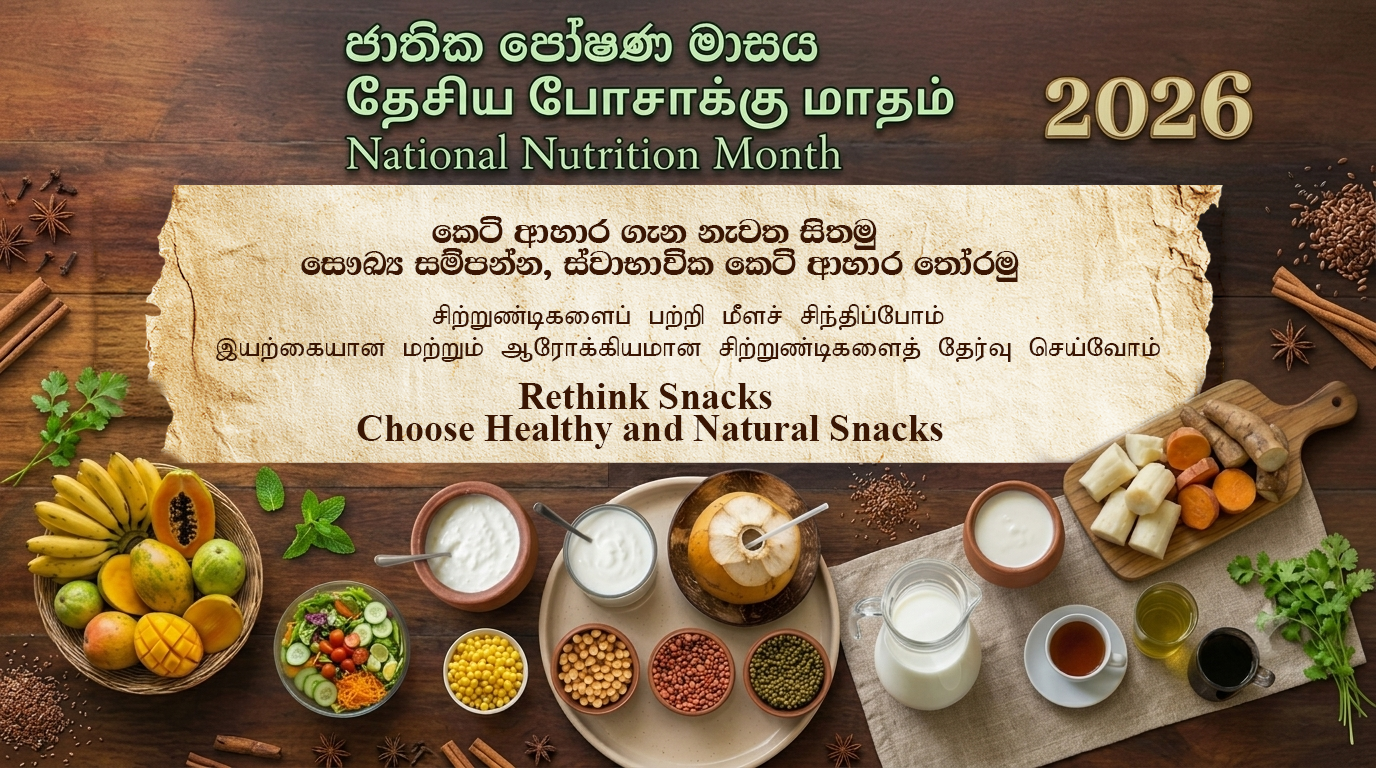
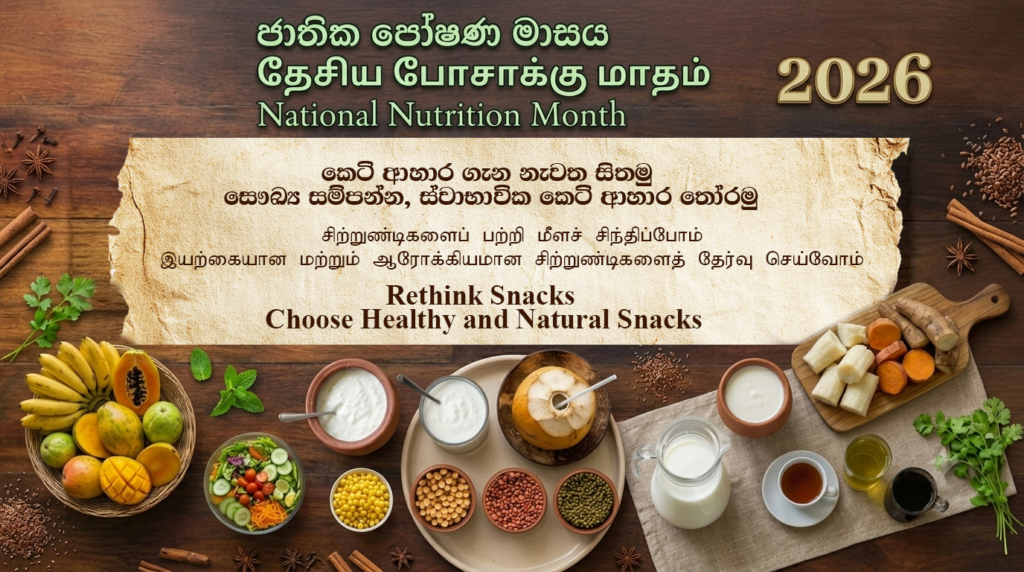
National Nutrition Month 2026

Sri Lanka is currently facing a triple burden of malnutrition, characterized by the coexistence of undernutrition, micronutrient deficiencies, overweight/ obesity and diet-related non- communicable diseases. In response to these emerging nutritional challenges, National Nutrition Month 2026 is being observed under the theme “Rethink Snacks – Choose Healthy and Natural Snacks”. The campaign aims to raise public awareness of the health risks associated with frequent consumption of processed and ultra-processed snacks and to promote healthier dietary habits across all age groups. Evidence shows that excessive snacking, particularly on foods high in sugar, salt and unhealthy fats, can contribute to overweight, obesity and many non-communicable diseases including diabetes, cardiovascular diseases and cancers.

National Nutrition Month 2026 encourages the public to prioritize balanced and nutritious main meals while reducing unnecessary snacking. When snacks are needed, preference should be given to natural, minimally processed and locally available foods such as fruits, vegetables, nuts, pulses, boiled yams and unsweetened dairy products, consumed in appropriate portions. Through community awareness programmes, nutrition education activities and multisectoral collaboration, the campaign seeks to promote healthier food choices, improve metabolic health and support the prevention of nutrition-related diseases, thereby contributing to a healthier and more productive Sri Lankan population.


Food Based Dietary Guidelines: culturally appropriate evidence based recommendations to establish a basis for public food and nutrition, health and agricultural policies and nutrition education programmes to foster healthy eating habits and lifestyles.
14 Guidelines
  1. Add Colour to your daily meals balancing the correct amounts.
  2. Eat whole grains and their products including less polished or parboiled rice, instead of refined grains and products.
  3. Eat at least two vegetables, one green leafy vegetables and two fruits daily.
  4. Eat fish or egg or lean meat with pulses in every meal.
  5. Have fresh milk or its fermented products.
  6. Eat a handful of nuts or oily seeds daily.
  7. Limit salty foods and adding salt to food.
  8. Limit sugary drinks, biscuits, cakes, sweets and sweeteners.
  9. Water is the healthiest drink: drink 8 to 10 glasses (1.5 – 2.0 liters) throughout the day.
  10. Be active: engage in moderate physical activity at least for 150 - 300 minutes every week.
  11. Sleep 7-8 hours continuously every day.
  12. Eat clean and safe food.
  13. Eat fresh and home cooked food: limit processed and ultra-processed foods.
  14. Always read labels of packaged food.

Upcoming Programs

Upcoming programs of the Nutrition Division, Ministry of Health

Read All

Read All

National Nutrition Month 2026

Theme - Rethink Snacks Choose Healthy and Natural Snacks

Read More

What is the body mass index (BMI)?

The body mass index (BMI) is a measure that uses your height and weight to work out whether your weight is healthy.  BMI is calculated by dividing an adults’s weight in kilograms by their height in meters squared.  For example, A BMI of 25 means 25kg/m2. Read More